The Idea
I keep things. A lot of things. Each one has a story attached, and the story is the whole reason the thing is still around. Get rid of the object and I'm afraid I lose the story too. So they stay.
The Memory Palace is a way to keep the story without keeping the box.
How It Works
For each object:
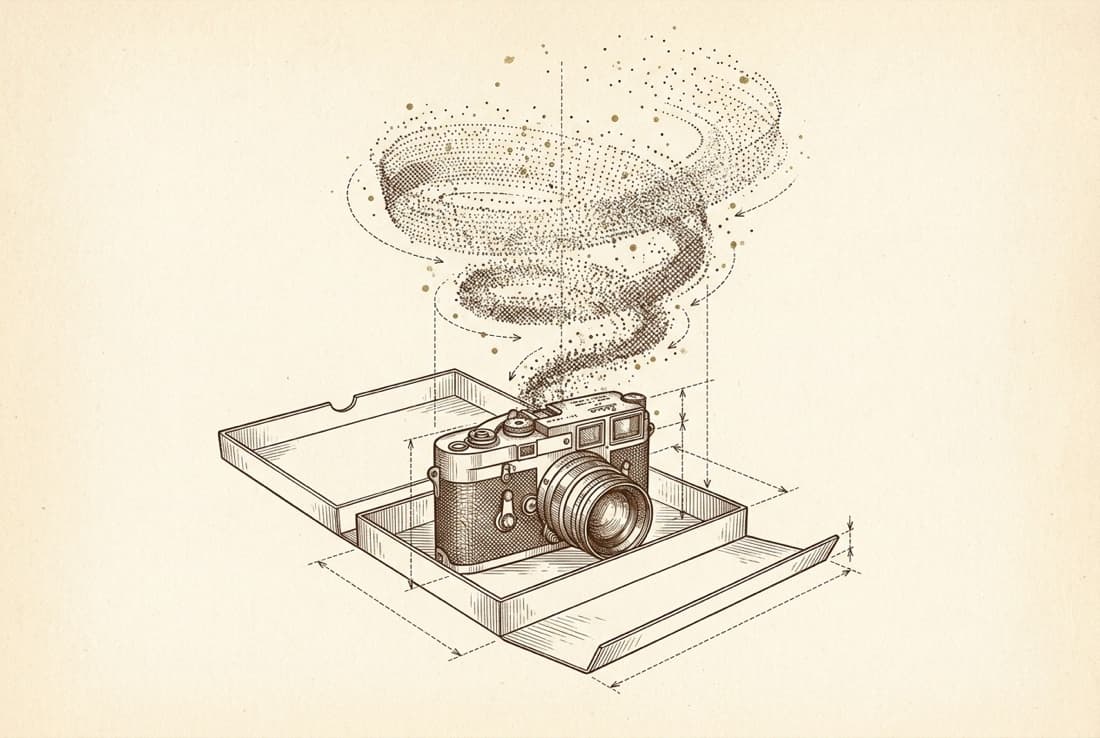
- Gaussian splat capture of the form. High-fidelity 3D representation, lighting and material captured photographically.
- Mesh + measurements captured in parallel. Printable. Reproducible at full scale on a 3D printer at any future date.
- A digital room that lives in VR. The objects sit on shelves, on tables, where I want them. Walk around. Pick them up. Put them back.
- Optional physical proxy. Print the mesh. Hold the printed copy with the VR headset on, see the splat overlaid on it. The visual fidelity of the splat plus the weight and shape of the print plus the brain doing the rest. Feels like the original.
- The story. Tied to each object. Voice memo, text, whatever. Replayed only when summoned.
The Wordless Book
A second output: a physical coffee-table book of high-resolution photographs of the objects. Just the images. No captions, no provenance, no story.
The stories stay in my head. I share them with whoever I want, in the moment, in the way I want them told that day. The book is the surface. The reader gets to look at the object. They don't get the story unless I'm there to tell it.
This makes the private stuff stay private. It also makes the curation an act of mine specifically, not a transcript anyone could read after I'm gone.
What Goes Away
When my mind goes, the story goes with it.
Unless I told it to someone, and unless they remember it the way I told it (which they won't, exactly), the story drifts. It exaggerates. It deteriorates. It modifies itself in the space between my telling and their memory of my telling.
The object is a quantum-paired anchor for a memory that only one consciousness can collapse. If the object is sitting on a shelf in this room, it has a story. If the object is a million miles away on another planet, it still has the same story, because the story isn't in the object. The story is in my recollection of the moment I came to keep it. When that recollection is gone, the object is just an object again, identical to one bought at a thrift store.
The Memory Palace doesn't fix this. Nothing fixes this. But it gives the object a digital existence that survives the original, gives the story a place to be summoned from while there's still someone around to summon it, and gives the people I love a small wordless artifact to flip through after.
Status
Concept. The capture pipeline is the main technical question (Gaussian splat scanning is mature now, prosumer scanners exist; mesh and dimensions are easier). The VR room and the mesh-meets-printed-proxy interaction loop is the fun part. The wordless book is a publishing exercise once the captures are done. None of the parts are blocking, all of the parts are ahead.