The idea
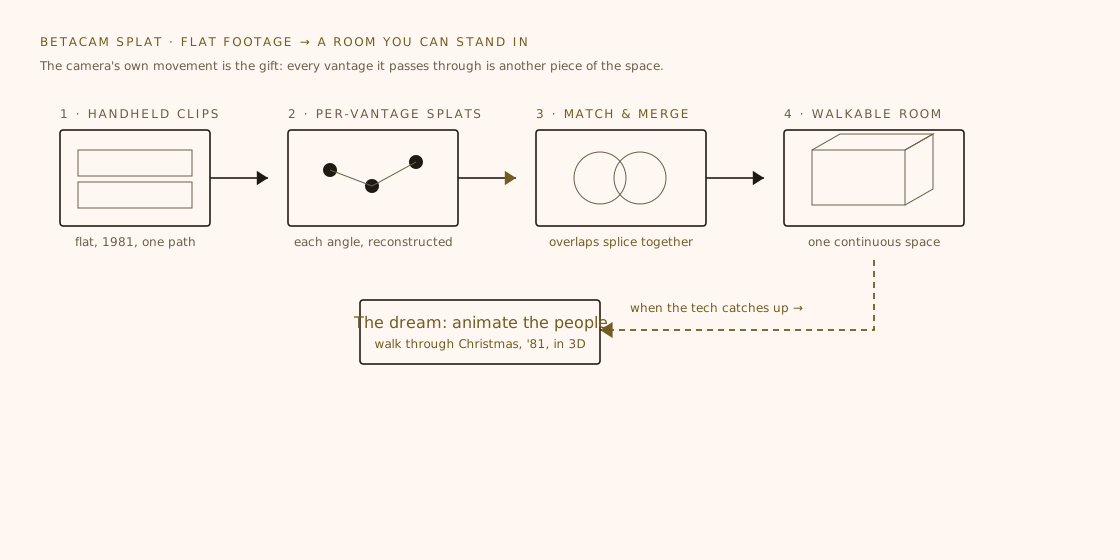
My dad had a Betacam in the early 1980s, which was a strange thing for a regular family to own then, and he pointed it at us. Christmas mornings, the living room, my sister and me, my parents younger than I am now. The footage is flat: a single moving window into rooms that are long gone.
The idea is to lift it off the strip. Use Gaussian splatting to reconstruct the space the camera saw, so a home movie stops being something you watch and becomes somewhere you can stand.
The splice
A single clip only ever shows one path through a room. The bet is that the camera's own movement is the gift:
- Each vantage the handheld camera passes through gets reconstructed as its own splat of the space.
- When the shot moves and reveals a new angle, the system maps that new vantage and, wherever the overlap matches, splices it into the growing scene.
- Clip by clip, move by move, the flat footage accretes into one continuous room you can move through, assembled from a camera that never knew it was surveying.
I am honest about the hard part: this is low-resolution, noisy, motion-blurred analog video from forty years ago, and robustly matching reconstructions across moving vantages is an open problem. This is a concept and a bet that the technology keeps closing the gap.
The dream
The endgame is not the room. It is the people. When temporal splatting and animation mature enough, the goal is to animate the figures inside the reconstruction, not just freeze the walls. To walk through the old house in '81, in 3D, and see my parents young, see myself as a kid, see a Christmas morning from a vantage the camera never took. Mind-bending is the right word for it.
Status
Concept. No build yet; this is the spec and the reason. The real dependency is the source: my dad's Betacam tapes, captured clean. Sibling in spirit to The Memory Palace, but aimed at the home movies and the moments, not just the architecture.